
PaaMoja Blog
Latest from PaaMoja
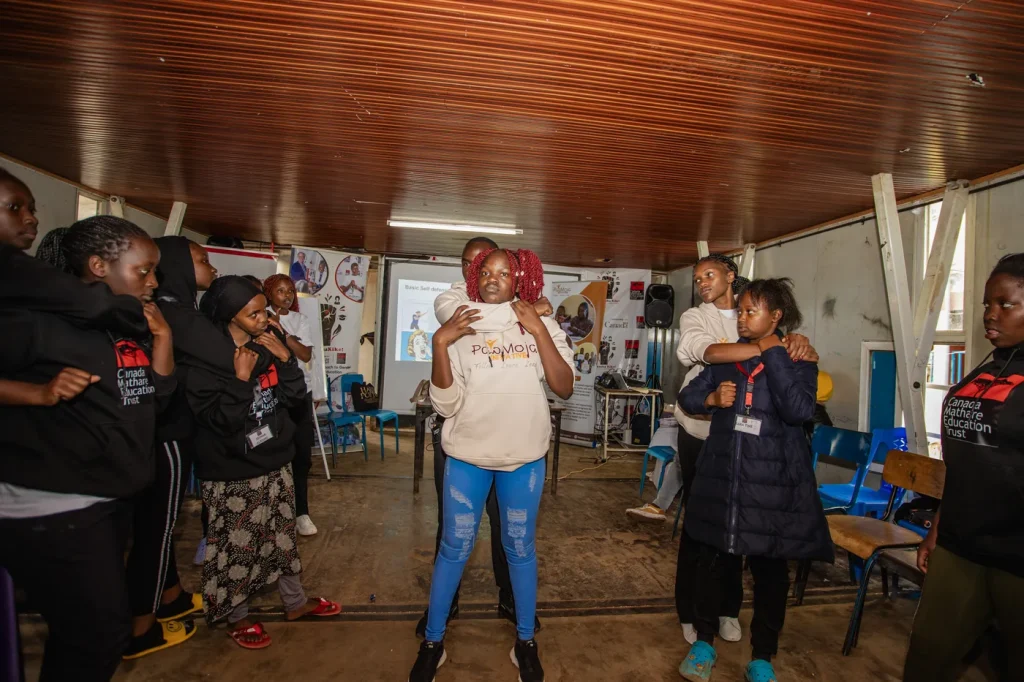
Building Safer Communities: Inside PaaMoja’s Self-Defense Training
What comes to mind when you hear the words “self-defense”? For a lot of people, it’s all about flashy martial arts moves, punches, and kicks. But if you walked into the PaaMoja iBase in Mathare, you would have seen something completely different.
You would have seen CMETrust scholars learning that true self-defense actually starts with confidence, voice, and community solidarity.
At the PaaMoja Initiative, we believe that safety isn’t about living in fear or shrinking ourselves to avoid trouble. It’s about claiming our space. Here is a look at the massive vibe shift that happened during our recent Self-Defense Training program.
It’s a Mindset.
One of the biggest takeaways from the training is that self-defense is psychological long before it ever becomes physical. Our scholars kicked off the program by diving deep into conversations about gender, boundaries, and breaking down harmful myths.
The room got real, fast. The guys openly challenged old-school ideas about masculinity. As one male participant shared,
“I used to believe that real men do not cry, but now I see emotional expression as a strength.”
Meanwhile, the girls spent time building up their emotional armor through power poses and affirmation circles. Shaking off hesitation and standing tall changed the entire energy in the room.
Equip the girls, engage the boys
When it was time to get practical, the training delivered tools that actually work in real life.
For the girls, the focus was entirely on creating space and escaping safely. They practiced releasing wrist grabs by using body leverage over brute force, and mastered targeted palm and knee strikes. But their most underutilized weapon? Their voices. The hall completely echoed as they practiced roaring boundary-setting shouts like “ACHA! SIMAMA!” One scholar hyped up the experience, saying,
“Sikua najua naweza kujiprotect na hizo tactics zote!”
But self-defense isn’t just a girl’s responsibility – and that’s where the boys stepped up. The young men learned the 3D Framework for Bystander Intervention:
- Distract: Creating a diversion to disrupt a sketchy situation safely.
- Delegate: Rallying other peers or trusted adults so nobody has to act alone.
- Direct: Stepping in directly to support and look out for the person being targeted.
As one of the boys beautifully put it:
“I’ve learnt that if I see a problem… I have to do something, because just watching will make it worse.”
Safer spaces take all of us
The most powerful part of the entire week was watching what happened when everyone came back together. In live, practical team simulations, the girls used their fierce physical and verbal boundaries, while the boys acted instantly as active allies. It wasn’t about individual competition; it was about teamwork and mutual protection.
To wrap it all up, the scholars signed the Pledge Board. Their promise? To choose safety over silence and respect over fear every single day.
These incredible young people didn’t just complete a course; they walked out of the iBase Hall as true community safety leaders. And honestly, that is a change we can all stand behind.
How do you practice safety and support in your own circles?
Share this post to spread the energy! #FollowLearnLead
PaaMoja
#FollowLearnLead
Mathare Valley, Nairobi, Kenya
info@paamoja.org